
Summary
- Xerox Holdings is looking at a paperless future and has actively started offering its IoT and AI solutions to a wide variety of industries.
- Wall Street maven, Carl Icahn, has recently picked up 4 million shares at an average price of $17.
- Though the company is likely to face challenges in the near term, its long-term outlook holds promise.
- I do much more than just articles at The Lead-Lag Report: Members get access to model portfolios, regular updates, a chat room, and more. Get started today »
Some people get rich studying artificial intelligence. Me, I make money studying natural stupidity. - Carl Icahn
One look at the financials and analysts' ratings of Xerox Holdings (NYSE:XRX) is enough to suggest that the company is operating in a shallow market and that it is better to track it rather than invest in it. Why then is the cult investor and XRX's 10% owner, Carl Icahn, picking up its stock like there's no tomorrow?
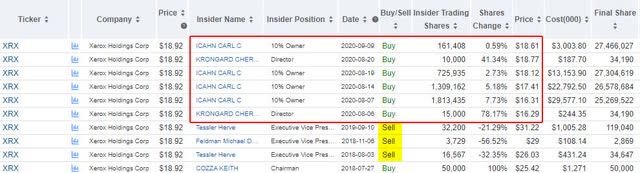
Image Source: Guru Focus
Icahn has picked up about 4 million shares between August 7, 2020, and September 9, 2020, at an average price of about $17. So what gives? Why is Icahn tanking up on XRX despite its stagnant prospects?
Here's my analysis:
XRX's Prospects
A paperless office saves time and money, reduces wastage, helps the environment, and optimizes on office space. Moreover, documents can be archived over the cloud, and there's adequate cybersecurity available to protect them from hacking. Businesses around the world are going paperless, and this is the most obvious hit to XRX's fortunes. These days many businesses are shut because of COVID-19, so this is further driving down the demand for printers, photocopying machines, and related equipment. This translates to a cruel double whammy for XRX.
The COVID-19 impact has been very severe on the company's financials. As of Q2 2020, XRX had managed to open just 50% of its facilities. The management team did not provide the 2020 guidance because there is too much uncertainty going around.
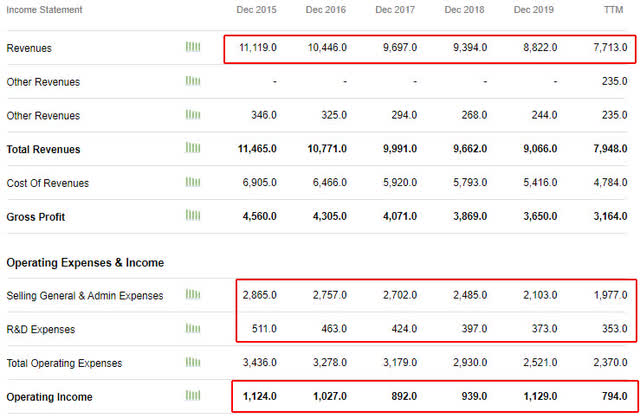
Image Source: XRX's Income Statement on SA
The company's revenues have been sliding since 2015, and it has been slashing its SG&A and R&D expenses to generate a reasonable operating income. It plans to save $450 million in costs in 2020. What's interesting is that despite a disastrous Q2 2020, the company scraped through with positive operating cash flows of $34 million. It also repaid $313 debt from its cash reserves.

