
Summary
- iRobot is still a great stock to buy despite the significant jump in price.
- COVID will make clear the benefits of the products it offers.
- The new normality will increase the trend towards automating home chores.
iRobot (IRBT) is expected to perform discouragingly, at least in the first half of 2020. Still, the new normality will become the critical catalyst to push the company higher, and it will be performing exceptionally in the following years.
Self-isolation has made evident the many advantages of Roombas and Bravas. As the Coronavirus continues to affect many countries, it will continue to show the benefits of the product iRobot produces. The company is still at a lower price than it was a year ago, and it is in better shape than ever, at a reasonable price and with the new normality in its favor.
Self-isolation and iRobot
There are many advantages to owning an automatic vacuum cleaner. However, the one obstacle that iRobot faces is the price of its products. While a Roomba could be the most convenient solution for vacuuming your home, there are other cheaper solutions like hiring someone or doing it yourself.
People who hire someone to do the chores realized that by introducing someone to their home, they are risking both parties to contract COVID. This added risk is pushing people to do the tasks themselves and try to automate as many activities as possible. Thus, many who, in the past, considered the automatic vacuum an unnecessary item might change their mind.
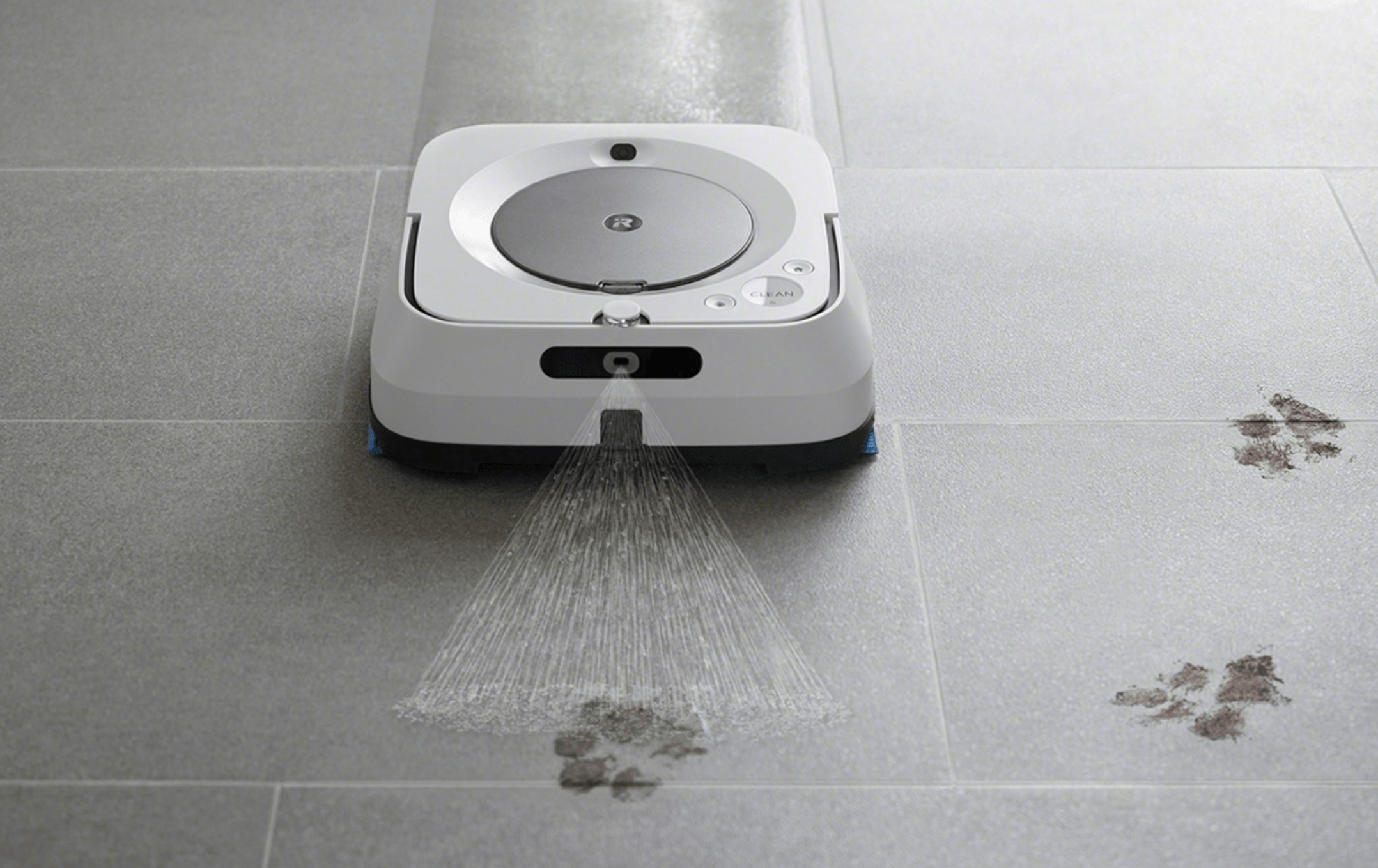
Source: iRobot
Self-isolation also increases the need to clean the house as people stay longer indoors, creating more dust and movement in the home, and as people pass more time in the house, they are more likely to notice dirt and dust.
While Coronavirus won’t last longer than 2020(hopefully), iRobot is likely to have a significant boost in sales in the short term from countries where there is a considerable risk of Coronavirus. In the long term, as measures like work from home become more common in the new normality, the trend could impact beyond this year and increase the growth of the company significantly.
Valuation
For the past five years, revenue growth has oscillated from 7.1% and 33.8%, and the trend has been growing. The estimate considers an average revenue growth of 9.4% compared to the past average of 18.8%. Gross margin has ranged from 44.5% to 50.7%. The estimate considers an average gross margin of 46.3% compared to the past average of 47.9%. R&D has been steady at around 12% as a percentage of revenue, and the model keeps this assumption for all scenarios. A similar approach holds for G&A as a percentage of revenue, where the model estimates to be held around 25% as a percentage of revenue. An argument could be made that, as the company grows, G&A will represent less than 25% of the revenue, however, to keep the forecast slightly on the pessimistic side, G&A is considered to be constant at 25% of the revenue.

