
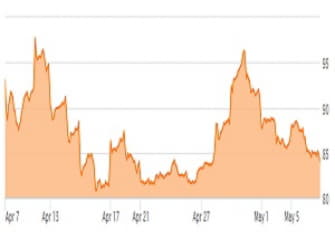
American Express (AXP) was founded 170 years ago and still pervades our daily lives. That puts it in uncommon company. Its premium clientele, low credit costs, and high discount rates are well-known and properly appreciated by investors. But one attribute is underappreciated: American Express's balance sheet is counter-cyclical. Although the company's net write-off rate will rise this year, write-offs will be on lower loans and receivables. As loans and receivables decrease, American Express generates capital, fortifying its position.
Cyclical companies are best valued on their through-cycle earnings. In this article, I lay out three simple ways to estimate American Express's normalized, through-cycle earnings power. I explore the implications of the company's counter-cyclical balance sheet, and finally, discuss whether American Express can withstand a worst-case scenario.
My conclusion is that American Express can, and will, survive this storm and is trading at approximately 9x pre-tax earnings or 11.5x after-tax. The business looks poised to return 11% annually over the long term. The stock could outperform the business by 4% annually if it re-rates to 14x, its long-term median, over 5 years. This means it could double by 2025.
READ FULL ARTICLE HERE

