
Summary
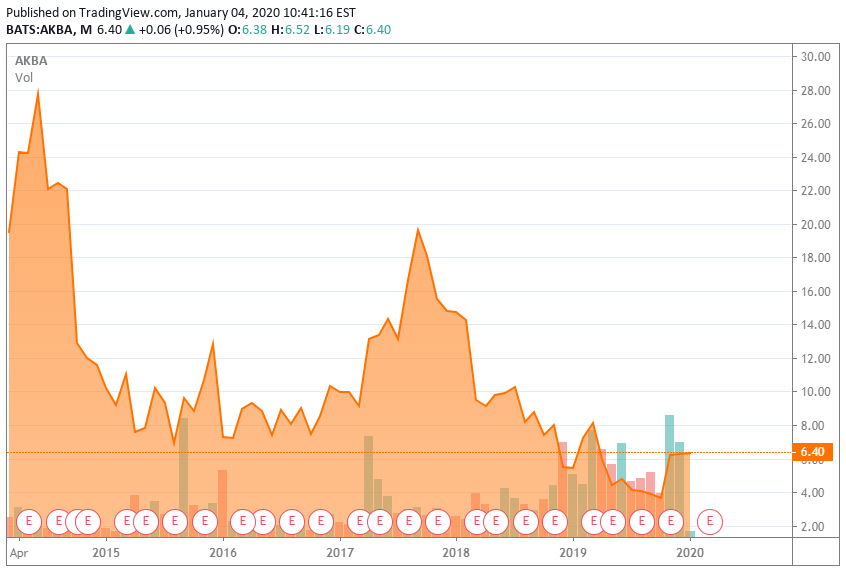
- Nephrology therapy concern Akebia Therapeutics, Inc. is down ~65% from its 2014 IPO price of $17 even with a recent rally.
- Two critical Phase 3 readouts are due in mid-2020 that should pave the way for FDA approval of its erythropoiesis asset (vadadustat) with blockbuster potential.
- However, competition from two similar candidates is looming.
- Insider buying in late November triggered a one-day 22% gain.
- A full investment analysis follows in the paragraphs below.
- I do much more than just articles at The Insiders Forum: Members get access to model portfolios, regular updates, a chat room, and more. Get started today »
Historian -- an unsuccessful novelist." - H.L. Mencken
Today, we take a deeper look at a small biotech concern that has been very volatile in its history as a public company. However, it has potential catalysts on the horizon and has picked up some insider buying of late as well. A full investment analysis follows in the paragraphs below.
Company Overview:
Akebia Therapeutics, Inc. (AKBA) is a Cambridge, Massachusetts-based biopharmaceutical concern focused on the development of therapies for kidney diseases. The company has one commercial product marketed for two indications and one late-stage candidate. Akebia was founded in 2007 and went public in 2014, raising net proceeds of $104.4 million at $17 a share. In December 2018, the company merged with Keryx Biopharmaceuticals in a transaction valued at $510 million. Thanks to a November 22nd 22% spike in price, Akebia currently trades just north of $6, commanding a market cap of ~$700 million.
The company’s commercial asset is Auryxia (ferric citrate), acquired as part of the Keryx merger. It is a non-calcium, non-chewable tablet approved as a phosphate binder for hyperphosphatemia – elevated serum phosphorus levels due to poor kidney function or kidney failure. It was approved for this indication in both the U.S. and Japan in 2014 and in the EU during 2015.
Before the introduction of Auryxia, over 85% of the ~511,000 adult patients afflicted with dialysis-dependent chronic kidney disease (DD-CKD) were treated with calcium or metal-based phosphate binders or OTC calcium carbonate products such as TUMS. However, DD-CKD patients sometimes are required to ingest a dozen or more phosphate binders daily leading to tolerability issues and consequent adherence and compliance problems. Additionally, calcium-based binders, which comprise nearly half of all phosphate binders, can lead to side effects such as increased cardiovascular risk, hypercalcemia and GI tract-related adverse events. Due to the risks associated with calcium-based binders, Kidney Disease: Improving Global Outcomes recommended that clinicians limit the use of calcium-based binders in 2017.
Source: Company Presentation
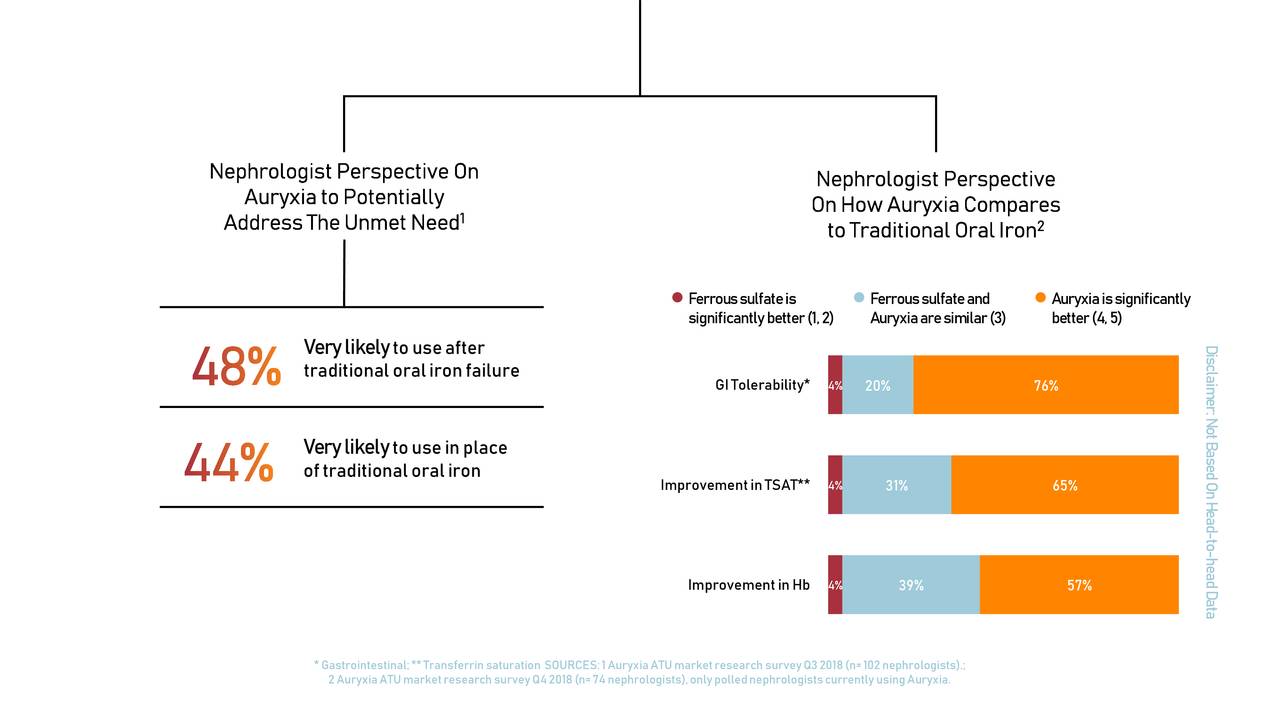
Auryxia was also approved for iron deficiency anemia (IDA) in November 2017. IDA affects ~500,000 Americans with non-dialysis dependent (NDD)-CKD. It is currently treated with injectable recombinant erythropoiesis-stimulating agents (rESAs) such as EPOGEN – which elevate the risk of hypertension and cardiovascular events – oral iron supplements – which are poorly absorbed and have GI tract side-effects – or IV iron, which is logistically difficult to administer in an office setting, where NDD-CKD patients are often treated.

